
The Social Dilemma
“Nothing vast enters the life of mortals without a curse.” Sophocles’ words open The Social Dilemma (Orlowski-Yang, 2020) documentary and set the stage for a difficult truth: social media is both one of the most powerful tools humans have ever created and one of the most dangerous.
In the documentary, former employees from Facebook, Twitter (now known as X), Instagram, Google, and Pinterest reveal that what began as a tool for connection has become a system designed to capture attention and sell it to advertisers. As Tristan Harris, former Google design ethicist, reminds us, tech companies carry a moral responsibility because their design decisions impact billions of lives.
Connection or Control?
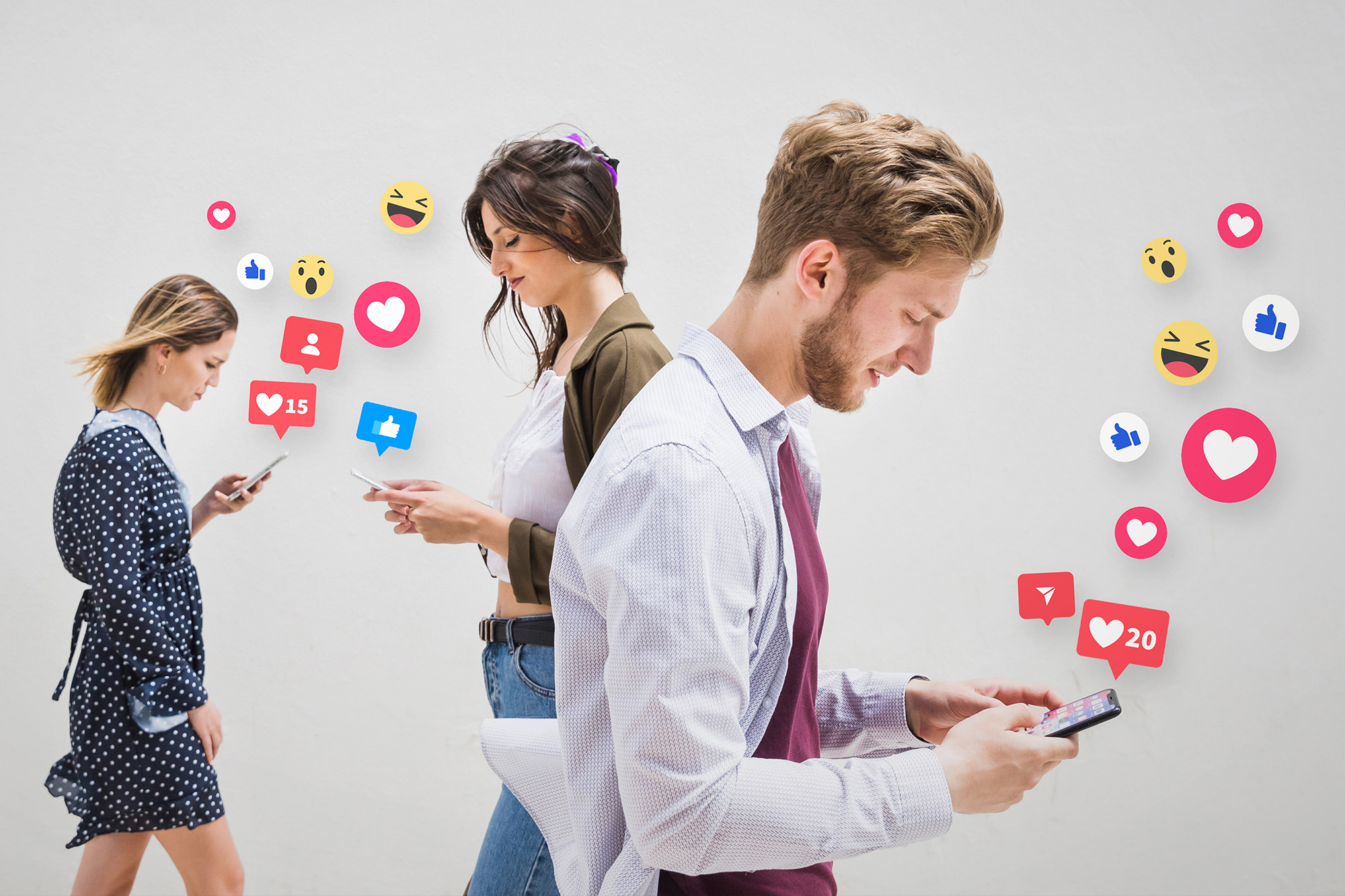
The double-edge of social media is clear: on one side, genuine human connection; on the other, profit. If you’re not paying for the product, you are the product. Social networks are engineered to keep us scrolling and to slowly shift our behaviors and beliefs in ways we barely notice.
Features like photo tagging or notification nudges may seem harmless, but they’re built to hack our psychology through persuasive technology, similar to the intermittent rewards of a slot machine (Montag et al., 2019). Over time, this erodes the boundary between tool and manipulation. As Edward Tufte famously observed, “there are only two industries that call their customers ‘users’: illegal drugs and software.”
The Mental Health Toll
Some critics of social media have argued that their impacts are especially stark for adolescents. They point to research that connects a sharp rise in anxiety, depression, and self-harm among teens, beginning around 2011 with the introduction of smartphones and social media during this same period (Haidt & Twenge, 2021; Curtin et al., 2019). For example, social psychologist Jonathan Haidt points out that Gen Z is the first generation to grow up with social media in middle school leading to a generation of more anxious, fragile, and risk-averse individuals than ever before (Twenge, 2017). Likes and comments become fragile substitutes for self-worth, offering short-lived highs followed by deeper lows (Haidt & Twenge, 2021).
However, other researchers caution against overgeneralizing the idea that social media is solely to blame for young people’s declining mental health. Odgers (2024) notes that meta-analyses and systematic reviews show no consistent link between social media use and overall wellbeing across countries, suggesting the relationship is much more nuanced. Adolescents who already struggle with mental health are more likely to turn to social media for connection or distraction (Odgers, 2024). Interviews with suicidal teens also highlight this complexity, showing that while some experience harm through cyberbullying or comparison, others find genuine support, coping tools, and even safety resources online (Weinstein et al., 2021). Likewise, research shows that while adolescents who spend more time on social media often report higher levels of distress, changes in how much time they spend online doesn’t always line up with changes in wellbeing (Coyne et al., 2020). Other factors, like emotion regulation and stress levels, seem to play an important role in shaping that connection (Rasmussen et al., 2020).
Even so, reducing usage can still make a difference. One study found that limiting social media to 30 minutes a day decreased feelings of loneliness and depression (Hunt at al., 2018). In other words, building healthier, more intentional habits around social media can help us reap the benefits while protecting ourselves from its potential harms.
The COVID-19 Stress Test
The COVID-19 pandemic made this double-edged nature of social media undeniable. Platforms became lifelines during isolation, buffering against loneliness for many young adults (Ellis et al., 2020). Many people found themselves leaning on video calls and group chats to stay grounded when the world felt uncertain.
However, the darker side was equally visible. The World Health Organization called the deluge of false content an “infodemic” (Cinelli et al., 2020). Studies found that high social media exposure during the outbreak was linked to greater anxiety and depression (Gao et al., 2020), while false COVID-19 information spread more quickly than corrections (Pennycook et al., 2020).
The pandemic underscored what’s at stake: social media is both medicine and poison. It can create resilience or magnify fear. It truly depends on how it’s designed and how we use it.
Algorithms, Bias, and Polarization
Behind the scenes, algorithms decide what we see. As data scientist Cathy O’Neil reminds us, “Algorithms are opinions embedded in code” (O’Neil, 2016). These systems optimize for engagement, not truth. That’s why typing “climate change is…” into Google produces different results depending on where you live and what you’ve clicked before.
This personalization creates rabbit holes, reinforcing biases (e.g., conspiracy theories, “fake news”) and polarizing communities. False information spreads faster and farther than truth—on Twitter, fake news travels six times faster than accurate stories (Vosoughi et al., 2018). During COVID-19, this wasn’t just frustrating; it was life-threatening.
Final Thought
Social media, like fire, is a tool. It can light the way or burn the house down. The more we understand its design—and our own vulnerabilities—the better chance we have of using it, rather than being used by it.
Self-Reflection
Building a Healthier Relationship So where does this leave us? Social media is both utopia and dystopia: the “like” button was created to spread positivity, yet it has fueled anxiety, comparison, and polarization. We make meaning out of the abundance or lack of likes a social media post obtains, leading us to either feel elated and well received or lonely and excluded.
As users, we can take small but meaningful steps to manage these emotional highs and lows while increasing our awareness of this emotional see-saw:
- Notice the Nudges. Recognize that notifications and infinite scroll are designed to hijack attention (Atler, 2017).
- Set Limits. Studies show reducing social media to 30 minutes a day decreases loneliness and depression (Hunt et al., 2018).
- Curate your feed. Follow accounts that uplift and unfollow those that drain you. Be aware of the social networking sites that feed you media based on algorithms and work to maintain this awareness as you are using (e.g., TikTok’s “for you page”).
- Pause before sharing. A quick check for accuracy helps slow the spread of misinformation (Pennycook et al., 2020).
- Reconnect. We can work to use social networking sites as the tool they were intended to be by interacting with online communities or connecting with loved ones who live far away. Additionally, Face-to-face connection builds resilience against digital stress (Hari, 2018). Work to increase your in-person connections with community members and loved ones.